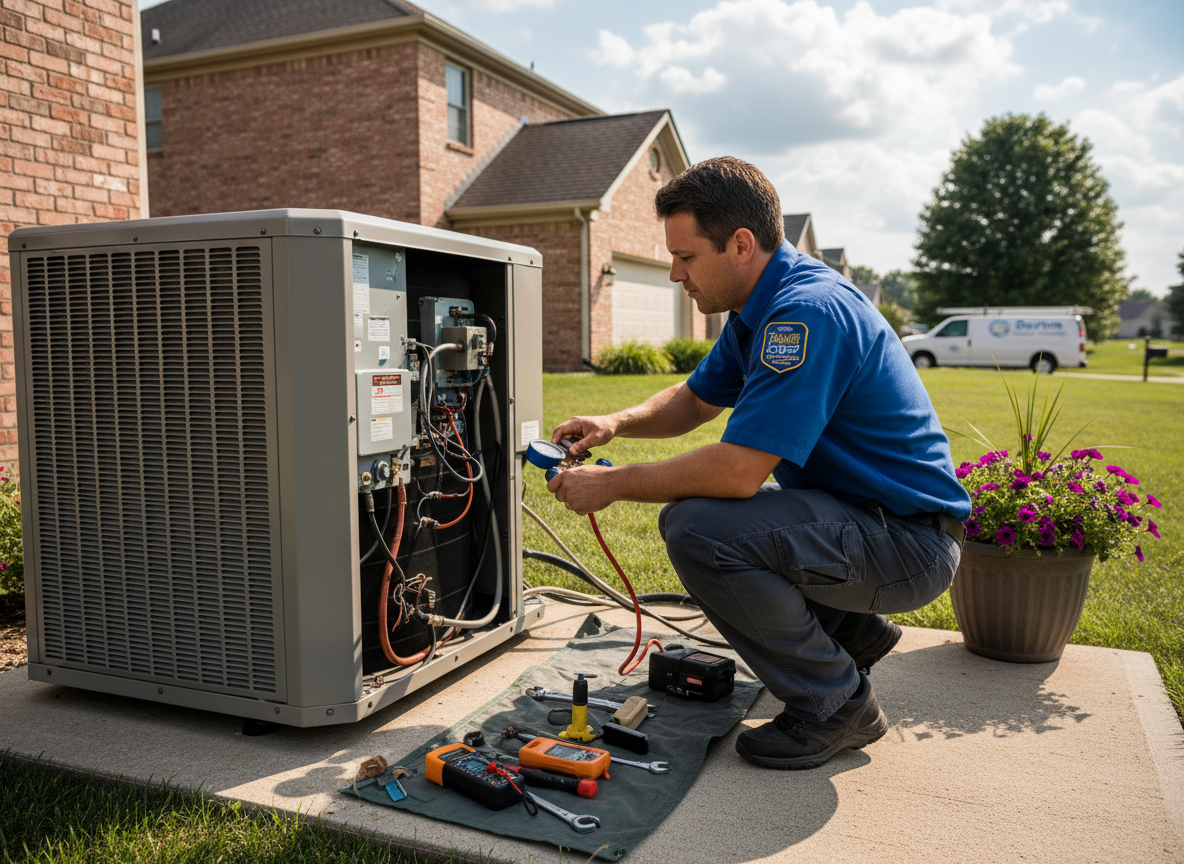
Dayton sits in a humid continental climate where winters are cold and summers turn hot and sticky fast. Homes in the Oregon District, South Park, and University Row often date to the early 1900s with single-stage units and original duct runs that collect debris over decades. A pre-summer tune-up checks refrigerant levels, cleans coils, tests capacitors, and confirms the condensate drain flows before humidity spikes. Skipping this step in older Montgomery County housing stock frequently leads to mid-July breakdowns when outdoor units struggle against 90-degree days and high dew points.
Technicians from Perfect Temp, based at 2800 E 3rd St, start every visit by verifying thermostat calibration and inspecting the air filter housing for gaps that let unconditioned air bypass the coil. In Kettering and Beavercreek subdivisions, many systems sit on slabs where soil settlement tilts the unit and restricts airflow. The tune-up includes tightening electrical connections that loosen from winter vibration and confirming the contactor is not pitted. These steps prevent short cycling that raises energy use once temperatures climb.
Edge cases common in Downtown Dayton include rooftop units on flat-roof buildings where leaves and pollen from nearby parks clog the condenser fins. The service also examines the evaporator coil for early corrosion caused by years of winter heating followed by sudden cooling demands. Homeowners in these neighborhoods benefit from catching small issues now rather than facing emergency calls when the Oregon District streets are already lined with festival traffic and repair trucks have limited access.
Technician insight
In Dayton the thing that catches most people out with Pre-Summer AC Tune-Up is the original ductwork in South Park and Oregon District homes from the 1920s. Those runs often have unsealed joints that only leak badly once the system pulls hard against July humidity, and the fix requires attic access that slab foundations in newer Kettering builds simply do not have.
South Park Bungalow
Homeowner called after noticing weak airflow on the second floor. We found a partially collapsed flex duct in the crawlspace that had shifted during winter freeze-thaw cycles. After re-supporting the run and sealing the joints the system delivered even cooling across both floors before the first heat wave.
How it works
- 1
Initial System Assessment
Technician arrives at the Dayton address and records model numbers, checks age of the unit, and notes any visible wear on linesets common in older Montgomery County homes.
- 2
Coil and Drain Cleaning
Outdoor condenser fins are rinsed and indoor evaporator coil is inspected for buildup; condensate pan and drain line are cleared to handle summer humidity without backups.
- 3
Electrical and Refrigerant Check
Capacitors, contactors, and wiring are tested; refrigerant pressures are measured against manufacturer specs for the current Dayton temperature range.
- 4
Performance Verification
System is run through a full cycle while monitoring temperature split and airflow to confirm it will handle peak summer loads in areas like South Park.
Pricing
Upfront quotes based on unit size and condition; typical pre-summer visits take 60-90 minutes.