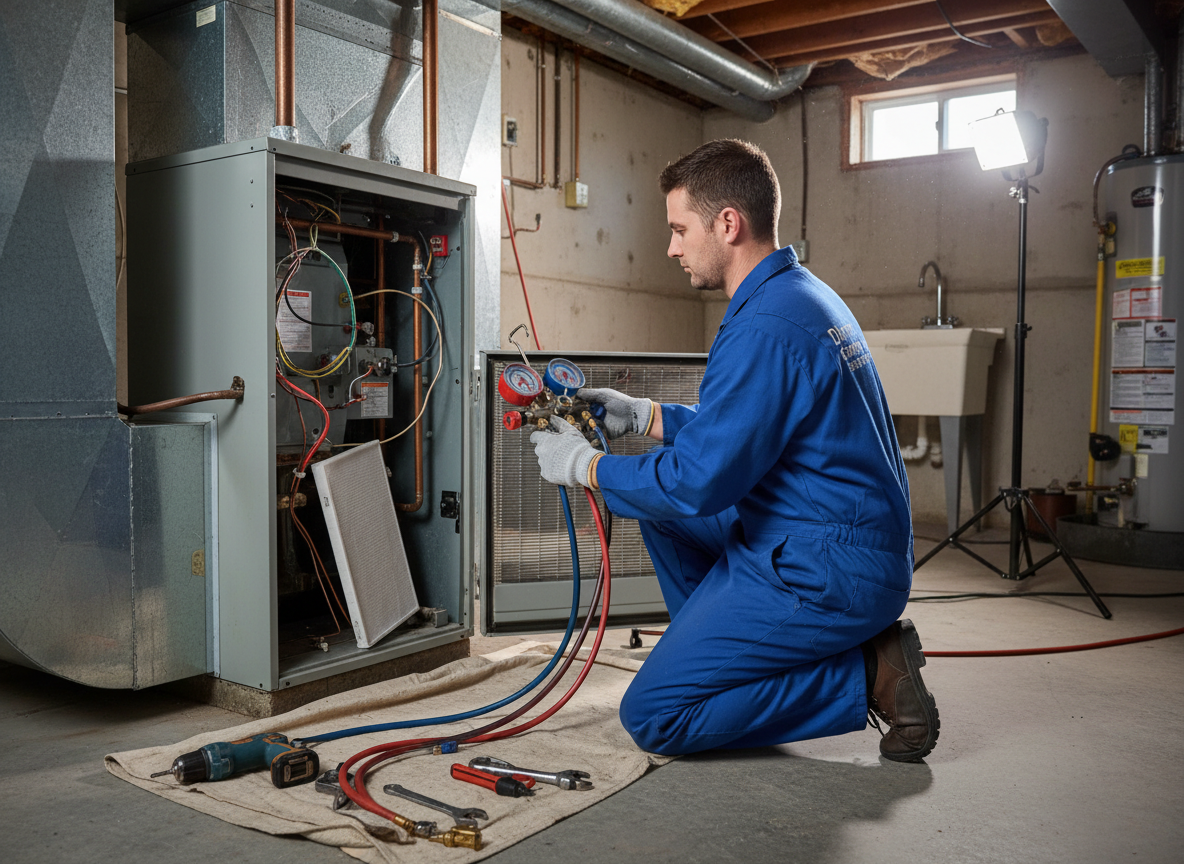
Dayton’s humid continental climate brings sharp swings between hot, humid summers and freezing winters that stress older heating and cooling systems in neighborhoods like the Oregon District and South Park. Homes built before 1950 often have undersized ductwork and single-pane windows that force equipment to run longer cycles. Perfect Temp techs based at 2800 E 3rd St routinely inspect for condensate drain clogs caused by high summer humidity and cracked heat exchangers that appear after repeated cold snaps.
University Row and nearby Kettering properties sit on clay-heavy soil that shifts with freeze-thaw cycles, sometimes pulling return-air ducts out of alignment. Technicians check for these movement-related leaks during every service call and recommend rigid metal extensions where flexible duct has torn. Beavercreek homes with finished basements frequently hide supply runs behind drywall; locating and sealing those hidden joints prevents the uneven room temperatures that homeowners notice first in winter.
Montgomery County code requires proper combustion-air openings for gas furnaces installed in tight basements. Missing or blocked vents can trigger carbon-monoxide concerns, so every heating inspection includes a visual check and CO testing before the system is returned to service. These details matter most when temperatures drop below freezing and residents need reliable heat overnight.
Technician insight
In Dayton the thing that catches most people out with Heating And Cooling Near Me is the combination of 1920s-era plaster walls in South Park homes and our sudden winter temperature drops; those walls hide original gravity ducts that restrict airflow once modern high-efficiency equipment is installed, so we always measure static pressure before quoting a replacement.
Furnace Failure in Oregon District Row Home
Homeowner in the Oregon District reported no heat during a January cold front. Inspection found a cracked heat exchanger on a 25-year-old furnace plus restricted return air from settled plaster dust in the original ducts. The exchanger was replaced, returns were cleaned and sealed, and the system was balanced for even heat across the three-story home.
How it works
- 1
Call Intake
Dispatcher gathers address, system type and symptoms, then schedules a same-day or next-day visit from the 2800 E 3rd St team.
- 2
On-Site Diagnosis
Technician inspects equipment, checks airflow, tests electrical components and measures temperature differentials in the specific home.
- 3
Clear Explanation
Findings are reviewed with the homeowner along with options that fit the age and layout of the Dayton property.
- 4
Repair or Tune-Up
Work is completed, system is retested and the space is left clean before departure.
Pricing
Upfront quotes given after inspection; no hidden trip charges within Montgomery County.