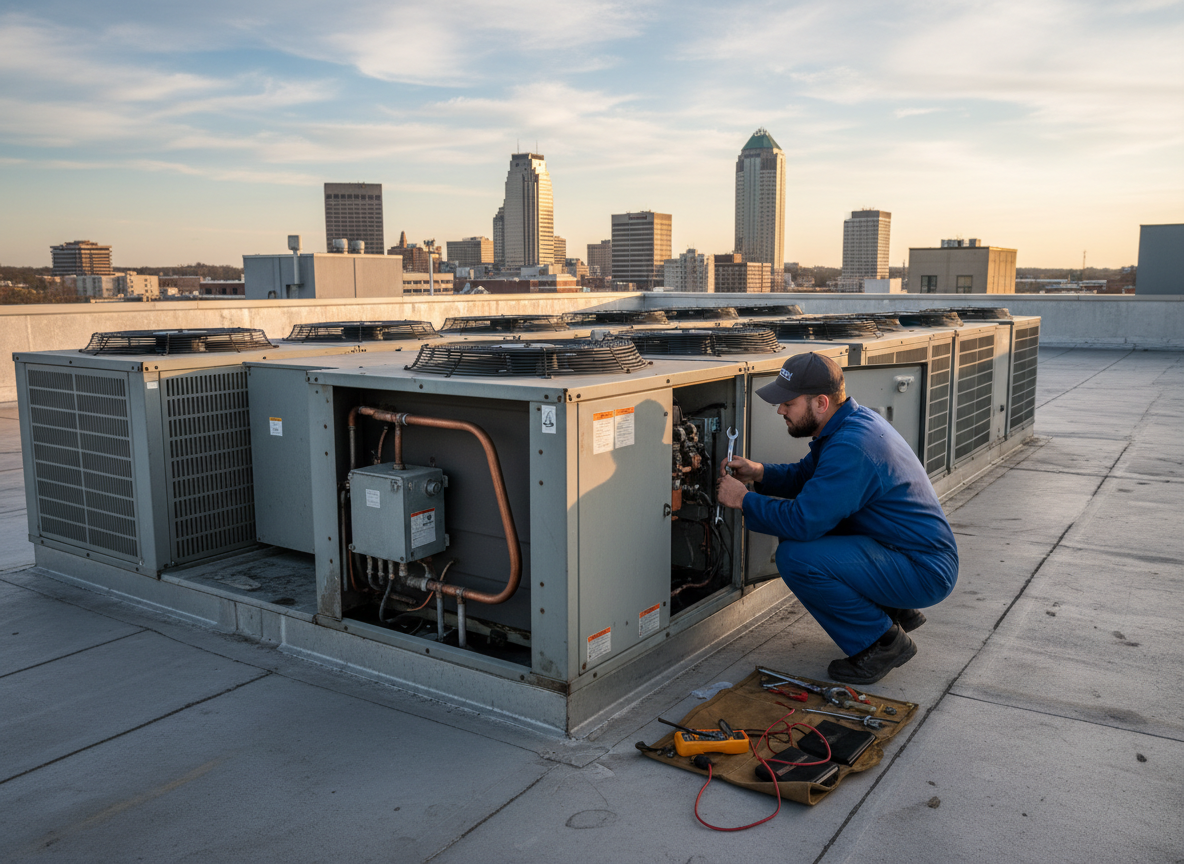
Dayton’s humid continental climate brings hot, sticky summers that push central air systems hard, especially in the older brick and frame homes common in the Oregon District and South Park. These houses often have original or poorly upgraded ductwork that leaks conditioned air into attics and crawl spaces, forcing compressors to run longer cycles. Technicians at Perfect Temp regularly find mismatched evaporator coils and outdated R-22 systems that need careful retrofitting to meet current refrigerant rules while restoring even cooling in second-floor bedrooms.
In neighborhoods like University Row and nearby Kettering, many homes built between the 1940s and 1970s still rely on basement or crawl-space air handlers that sit in damp conditions. Condensation drains clog with sediment from Montgomery County’s hard water, leading to overflow and ceiling stains. Repair calls frequently involve clearing these lines, replacing failed condensate pumps, and sealing duct joints with mastic rather than tape so humidity does not re-enter the system during July and August peaks.
Beavercreek properties near the National Museum of the US Air Force often sit on slightly higher ground with better drainage, yet their larger floor plans create long duct runs that lose pressure. When a capacitor or contactor fails, the entire house can go without cooling within an hour on a 90-degree day. Perfect Temp keeps common 24/7 parts on the truck so repairs finish the same visit instead of leaving families to wait for next-day parts in the summer heat.
Downtown Dayton high-rises and converted lofts present different challenges: limited mechanical space and shared risers mean any central air repair must coordinate with building management and follow strict access rules. Technicians check static pressure across the coil before and after service to confirm airflow meets code, preventing callbacks when the first cold snap of fall arrives.
Technician insight
In Dayton, the thing that catches most people out with Central Air Repair is clogged condensate drains in the damp basements of pre-1970 homes in South Park and the Oregon District; the hard water here builds up fast and one missed annual cleaning turns a simple service into a ceiling repair.
South Park Split-System Failure
Homeowner in a 1950s South Park bungalow reported the upstairs staying warm while the basement unit ran constantly. Inspection showed a failed run capacitor and a completely blocked condensate line from mineral buildup. Replaced the capacitor, cleared the drain, sealed two leaking duct joints, and restored even cooling throughout the house the same afternoon.
How it works
- 1
Initial Assessment
Arrive on site, verify thermostat settings, and measure supply and return temperatures to confirm the complaint.
- 2
System Diagnosis
Check capacitors, contactors, refrigerant levels, and drain lines while inspecting accessible ductwork for leaks common in older Dayton homes.
- 3
Repair Execution
Replace failed components, clear drains, seal accessible joints, and recharge if needed using approved methods for the existing refrigerant.
- 4
Performance Verification
Run the system through a full cycle, recheck temperatures and pressures, and confirm even cooling before leaving the property.
Pricing
Upfront quotes after inspection; price varies with system age, refrigerant type, and access conditions in older Montgomery County homes.