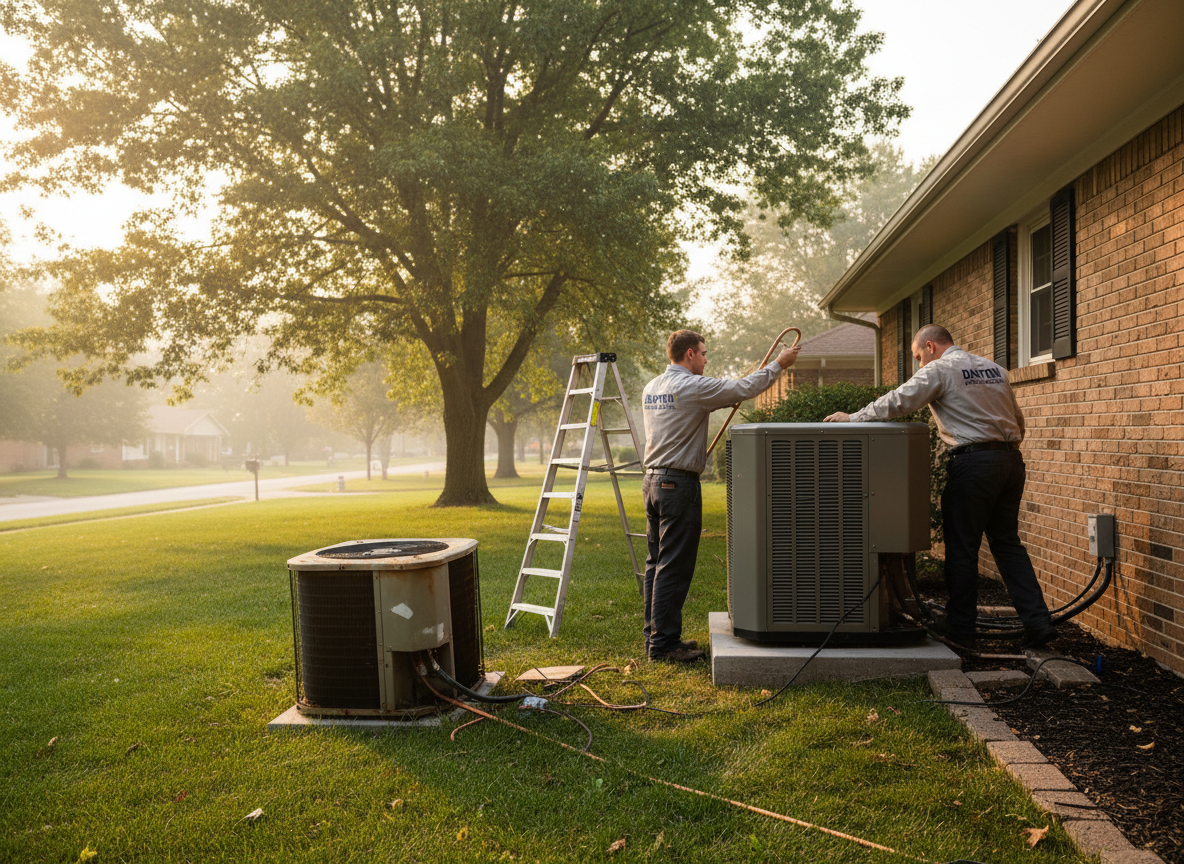
Dayton homes in neighborhoods like the Oregon District and South Park often date back to the early 1900s with narrow duct runs and limited attic space that complicate new equipment installs. Hot humid summers push systems hard while winter freezes can leave condensate lines vulnerable if not properly sloped during replacement. We size units for the actual load in Montgomery County brick and frame houses rather than using rule-of-thumb tonnage that fails once humidity spikes in July.
Replacing an air conditioner here frequently means addressing mismatched evaporator coils left from previous retrofits and ensuring the new system integrates with existing furnaces common in University Row and Downtown Dayton properties. Proper refrigerant line evacuation prevents moisture issues that shorten compressor life in our humid continental climate. Crews at 2800 E 3rd St keep trucks stocked for same-day changeouts when an older unit fails during a heat wave affecting Kettering and Beavercreek residents.
Local code requires permits for any new outdoor unit placement to maintain setbacks from property lines, especially tight on South Park lots. We pull those permits and handle the coordination so homeowners avoid fines. Older homes also need attention to electrical service capacity before the new condenser is set, preventing tripped breakers once the system runs at full load during peak summer afternoons.
Technician insight
In Dayton, the thing that catches most people out with Air Conditioner Replacement is undersized return air paths in pre-1950 homes around the Oregon District; the new high-efficiency unit then short-cycles because the old duct system cannot deliver enough airflow once static pressure rises.
South Park Brick Home
An older unit in a South Park two-story failed during a humid July stretch. We found the evaporator coil frozen from restricted return air and mismatched tonnage. New equipment was selected to fit the existing plenum, linesets were replaced to restore proper refrigerant flow, and the system now maintains even temperatures without icing.
How it works
- 1
Site Assessment
We measure existing ductwork, electrical service, and load calculations specific to the home's age and orientation in Dayton neighborhoods.
- 2
Equipment Selection
Match SEER rating and capacity to the house while confirming compatibility with the existing furnace and thermostat controls.
- 3
Old Unit Removal
Recover refrigerant, disconnect lines, and remove the outdoor condenser and indoor coil without disturbing surrounding landscaping or roofing.
- 4
New Installation
Set the new condenser on a level pad, run new linesets if needed, connect to the coil, and complete electrical and drain work.
- 5
Startup And Testing
Evacuate the system, charge with refrigerant, verify airflow, and confirm operation across cooling stages before leaving the site.
Pricing
Upfront quotes based on home size, existing duct condition, and whether linesets or electrical upgrades are required.