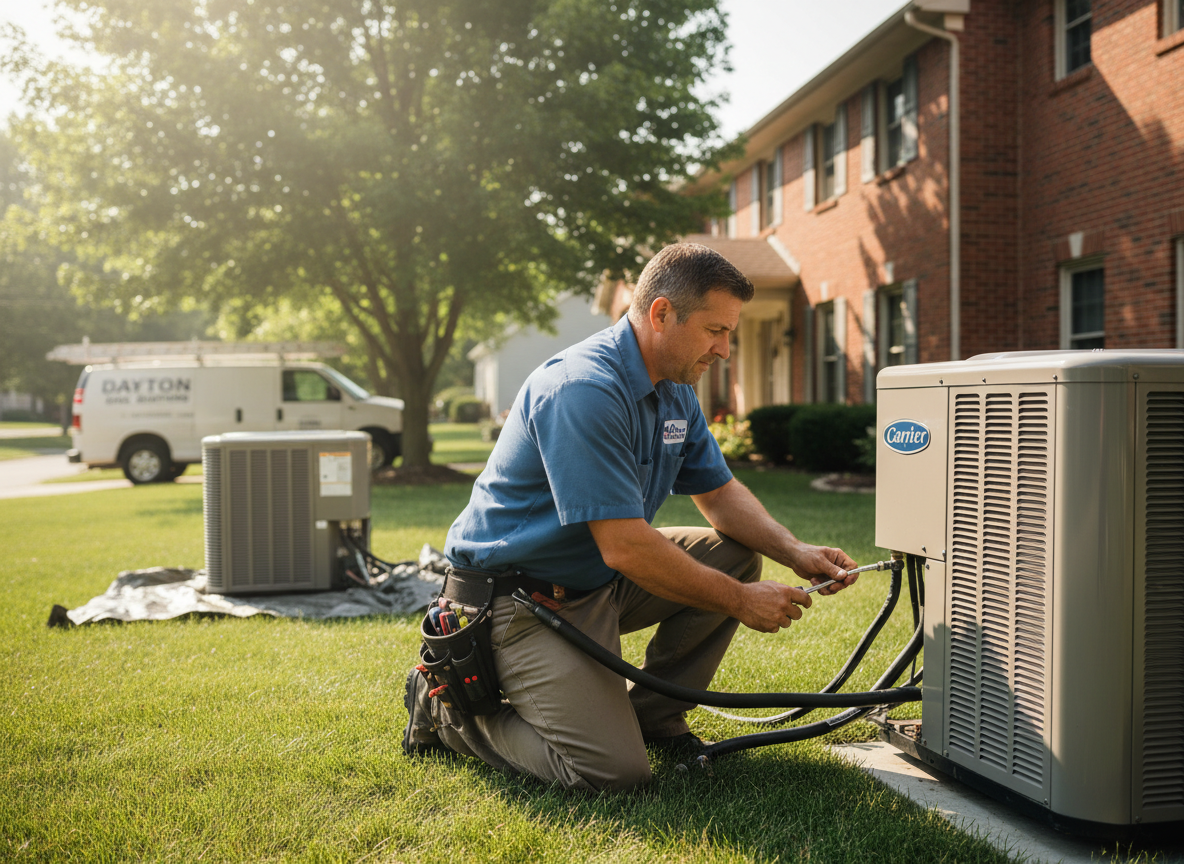
Dayton homes in areas like South Park and the Oregon District often date to the early 1900s, with knob-and-tube wiring and undersized return ducts that force extra steps during AC installation. We measure static pressure and inspect attic insulation before selecting equipment, because hot humid summers push systems hard while cold winters require units that won't short-cycle. Proper refrigerant line routing through balloon-framed walls prevents future leaks that show up after the first deep freeze.
In Montgomery County, many properties near the Dayton Art Institute sit on clay-heavy soil that shifts with freeze-thaw cycles, so outdoor pad placement and condensate drainage must account for settling. We pull permits through the city and verify that new high-efficiency units meet current energy codes, which older Kettering split-levels frequently fail on first inspection. Skipping these checks leads to callbacks when humidity control fails during July peaks.
Beavercreek subdivisions built in the 1980s often have flex duct runs that have collapsed over time, reducing airflow to upstairs bedrooms. During installation we replace or resize those runs and add balancing dampers so the system delivers even temperatures without oversizing the compressor. This approach avoids the short-cycling that wears out equipment faster in our variable spring weather.
Technician insight
In Dayton, the thing that catches most people out with AC Installation is the 60-amp service panels still common in pre-1960 homes around University Row; they almost always need a subpanel upgrade before a modern 3-ton unit can be added without tripping breakers during peak summer loads.
South Park Bungalow Upgrade
The homeowner called after the old window unit failed during a July heat wave. We found collapsed flex duct in the attic and a 100-amp panel at capacity. We replaced the main trunk, installed a properly sized high-efficiency unit on a level pad, and added a dedicated circuit. The home now maintains even temperatures without the humidity spikes that previously caused mold on basement walls.
How it works
- 1
Site Assessment
We inspect existing ductwork, electrical service, and attic insulation in your Dayton home to determine the correct equipment size.
- 2
Load Calculation
Manual J calculations account for Montgomery County humidity levels and the specific orientation of your house relative to nearby landmarks like Carillon Historical Park.
- 3
Equipment Selection
We match the unit to your home's needs, confirming it fits through standard doorways common in Oregon District properties.
- 4
Installation and Testing
New lines are run, the system is charged, and we verify airflow and drainage before leaving the job.
Pricing
Cost depends on home size, existing duct condition, and whether electrical upgrades are required.